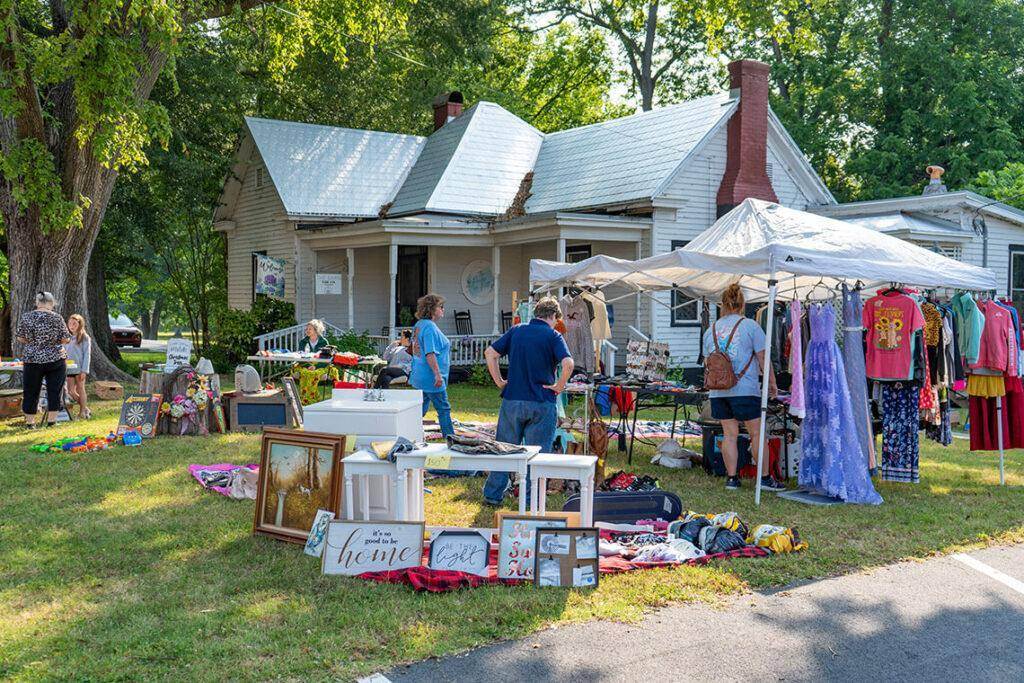

In a world where thousands of ads are posted on social networks every day, reaching the right audience isn't always easy. Even a garage sale offering special items at attractive prices may end up with almost no visitors if people in the area don't know it's happening.
On the other hand, well-planned advertising can help turn a small event into a successful meeting between sellers and buyers, attract second-hand lovers, collectors and families, and create opportunities to sell a wide range of items.
So where should you advertise a garage sale? How do you promote a second-hand fair? How do you get people to discover a new vintage shop? And which advertising channels suit the Israeli audience in particular?
In this guide we'll review the main advertising options, look at the pros and cons of each, and share practical tips to help you increase your exposure and attract a relevant audience.
Why Is Good Advertising So Important for a Garage Sale or Second-Hand Fair?
Garage sales, second-hand fairs and vintage shops appeal to a wide range of audiences.
Some people are looking for affordable furniture, others love vintage clothing, and some especially enjoy hunting for old books, records, housewares, collectibles and unusual objects.
But the target audience isn't always in one place.
Collectors may be active in dedicated Facebook groups. Families looking for children's gear may prefer neighborhood groups. People looking for a weekend outing may search for events near them on Google or on event listing sites.
That's why one of the common mistakes when advertising garage sales is settling for a single post in one Facebook group.
Effective advertising should answer a few key questions:
- Who is the event's target audience?
- Which geographic area are the potential buyers in?
- Which platforms do they look for information on?
- How long before the event should you start advertising?
- How can you make your listing stand out among other posts?
- How can you make it easy for interested people to find the event details?
The clearer the answers to these questions, the more wisely you can choose the right advertising channels.
1. Advertising a Garage Sale in Facebook Groups
Facebook is one of the most accessible options for advertising garage sales, second-hand fairs and local activities in Israel.
There are many groups devoted to buying and selling, second-hand, collecting, vintage, furniture, clothing and community activities.
The main advantage of Facebook groups is the ability to reach an audience that's already interested in a particular topic or lives nearby.
Local buy-and-sell groups
When organizing a garage sale in Haifa, for example, look for groups dedicated to buying and selling in Haifa and the surrounding area.
The same principle applies to Tel Aviv, Jerusalem, Rishon LeZion, Be'er Sheva, Netanya, Rehovot, Petah Tikva and any other town.
Rather than settling for one large national group, it's worth combining several relevant local groups.
The reason is simple: someone who lives a few minutes from the garage sale is more likely to come than someone who lives at the other end of the country.
Searching for groups with phrases like "second-hand in Haifa", "buy and sell in Tel Aviv" or "garage sales in the north" can help you find suitable communities.
Be sure to check each group's posting rules. Some groups allow commercial posts, others limit them to certain days, and some don't allow event posts at all.
Collecting and vintage groups
If the garage sale includes special items, consider also posting in groups for enthusiasts of the field.
For example, a garage sale with old records may interest music collectors. A sale with old cameras may suit photography and collecting groups, while furniture from the 1950s and '60s may interest vintage design lovers.
Targeted advertising like this lets you reach people for whom the items aren't just used things, but pieces with personal, design or collectible value.
That said, don't automatically spread the same post across dozens of groups without discrimination. Repeated posts that don't fit a group's character may be seen as spam and even removed.
2. Advertising on Facebook Marketplace
Facebook Marketplace is a tool that lets users list products and search for items offered for sale.
It can be especially useful when you want to promote standout items from a garage sale.
For example, if an antique table, armchairs, a bicycle or special furniture will be sold at the sale, you can consider listing those items separately, in line with the platform's rules.
In the listing you can mention that the item will be available at a garage sale taking place on a certain date.
However, it's important to understand the difference between listing a single product and advertising a whole event.
Marketplace focuses mainly on products and sale listings. So it isn't necessarily the best solution for presenting an event with dozens or hundreds of items.
When the goal is to draw visitors to an entire garage sale, combine it with other channels suited to advertising events.
3. Advertising Garage Sales via WhatsApp
WhatsApp can be an effective tool for spreading the word about local events.
Neighborhood groups, community groups and groups of second-hand enthusiasts may all be relevant for advertising a garage sale.
WhatsApp's advantage is simplicity: you can send a message with a photo, address, date and opening hours directly to people interested in the topic.
How do you write a good WhatsApp message?
A good message should be short, clear and focused.
For example:
Big garage sale in Haifa — this Friday!
A wide range of furniture, housewares, books, clothes, toys, vintage items and special finds.
📍 Location: [address]
📅 Date: [date]
🕘 Hours: [opening hours]
Come by, have a look and find some great bargains!
You can attach a few photos of the standout items, but it's best not to cram dozens of photos into one message.
It's also important to ask permission before posting in groups that aren't meant for commercial posts, and not to send promotional messages to people who haven't agreed to receive them.
4. Advertising Second-Hand Fairs on Social Media
A second-hand fair is different from a private garage sale.
In many cases it's an event with several sellers, stalls, an activity area and sometimes additional services for visitors.
So it's important to advertise the fair not only as a sales event, but also as an outing.
Advertising on Instagram
Instagram is a platform especially suited to visual content.
If the fair includes vintage stalls, special clothing, handmade work, collectibles or home design, photos and videos can help convey the expected atmosphere.
You can post photos from the fair's preparations, introduce some of the participating sellers and share short videos of the items that will be on sale.
Ideally, every post should include the town, date, opening hours and location.
Advertising with short videos
A short video can quickly show the range of items and the special character of the event.
For example, a video showing a sequence of records, vintage clothing, ceramics and old furniture may spark interest among enthusiasts.
There's no need for an expensive video production. A clear clip shot on a mobile phone can be enough.
However, make sure the video represents the products or the place truthfully and doesn't create expectations that don't match the event.
5. Advertising Garage Sales via Google
When someone searches online for "garage sale in Haifa", "second-hand fair on Saturday" or "vintage shops in Tel Aviv", they're already expressing interest in the topic.
That's why it's worth thinking not only about social media, but also about the possibility that people will find the event through search engines.
The importance of keywords
A listing with a generic title like "Big sale" doesn't tell people much about what the event offers.
A title like "Garage sale in Haifa — furniture, vintage clothing, books and housewares", on the other hand, gives much clearer information.
Include phrases in the event description that people are likely to search for naturally:
"garage sale", "second-hand sale", "second-hand fair", "vintage furniture", "collectibles" and the name of the city or area.
There's no need to repeat the same phrases over and over. It's better to write a natural, detailed description that explains what visitors can expect.
Keep in mind that posting on a website doesn't guarantee the listing will appear in Google's search results. Visibility depends, among other things, on the page being indexed and on other factors.
6. Advertising a Second-Hand Shop on Google Maps
Unlike a one-off garage sale, a second-hand shop usually operates from a fixed location.
So owners of suitable shops should look into creating a Google Business Profile, subject to the service's eligibility requirements.
A profile like this can show information such as the business name, location, opening hours, photos and contact details.
Someone searching for "second-hand shop near me" or "vintage shop in Haifa" may rely on Google's local results.
How do you improve a second-hand shop's presence?
First, make sure the shop's name, address and opening hours are up to date.
Second, upload real photos that represent the kinds of products sold there.
Third, describe what the shop specializes in.
A shop focused on vintage clothing isn't the same as one selling used furniture, and a collectibles shop isn't the same as a shop for household goods.
An accurate description helps customers understand whether the place fits what they're looking for.
7. Local Advertising with Signs and Flyers
Despite the importance of digital advertising, physical advertising can also have a place in promoting garage sales.
A garage sale is usually a local event, so people who live nearby are an important target audience.
You can consider posting notices on neighborhood boards where posting is allowed, at community centers or in other places that permit it.
Make sure your advertising follows local rules, and avoid sticking up notices or placing signs where it isn't allowed.
What should a sign include?
A good sign should be readable from a reasonable distance.
It should include a clear headline, date, hours and address.
For example:
Big garage sale!
Friday | 09:00–14:00
Furniture | Books | Clothes | Housewares
______ Street, No. ___
Use large letters and avoid cramming in lots of small text.
If the event is in a place that's hard to find, include clear directions in your digital listings.
8. Partnering with Local Businesses
Another way to increase exposure is to partner with businesses and community organizations in the area.
For example, organizers of a second-hand fair can approach cafés, local shops, community centers or business owners interested in promoting neighborhood activities.
A partnership might mean sharing a post, displaying a notice at the business or spreading information through community channels.
Of course, any such advertising should be done with the consent of whoever is publishing it.
For larger fairs you can also consider approaching local media, especially when the event includes a community activity, an environmental initiative or a social cause of public interest.
9. How Do You Advertise a Garage Sale in a Way That Grabs Attention?
Where you advertise is only part of the picture.
How you present the garage sale also affects your ability to spark interest.
A listing that only says "Garage sale on Friday" leaves many questions unanswered.
What's being sold? Where is the sale? Is there furniture? Clothes? Can you come with kids? What are the hours?
It's worth giving clear answers right in the listing.
An accurate, catchy title
A good title combines the type of event, the location and its standout features.
For example:
"Garage sale in Ramat Yishai — furniture, books, vintage and finds for the home"
or:
"Second-hand fair in the Jezreel Valley — clothing stalls, collectibles and housewares"
Titles like these let interested people quickly understand whether the event may interest them.
Good-quality, real photos
Photos are one of the main ways to show what the sale is like.
Photograph items in good lighting, in a tidy space, without unnecessary clutter hiding them.
If the garage sale includes a wide range of items, you can show a few photos representing different categories.
For example, one photo of furniture, another of housewares and one of clothes or collectibles.
There's no need to show every item separately, but the photos should give a faithful picture of the range of products.
Listing the types of products
Different people look for different things.
So state explicitly which kinds of items will be on sale.
Instead of writing "lots of stuff", you can list:
furniture, kitchenware, books, records, clothes, toys, decorative items, vintage goods and collectibles.
The more accurate the information, the easier it is to attract the right audience.
10. When Should You Start Advertising a Garage Sale?
One of the most common questions is how long before the event you should advertise.
There's no single timeline that fits every garage sale or fair.
Timing depends on the size of the event, the area, the target audience and the nature of your advertising channels.
That said, a simple plan can help.
About two weeks before the event
If the sale details are final, you can post a first announcement with the date, place and types of items.
This is also a good time to check which groups you can post in and whether you need approval from group admins.
About a week before the event
You can post more photos of the main items and remind people of the date.
For a fair, you can present the types of stalls or the planned activities.
A day or two before the event
Post a reminder with all the important details.
It's especially important to make sure the address and opening hours are correct.
On the day of the event
You can post a short message that the sale has opened, as long as posting is allowed in the channel you're using.
For example:
"Our garage sale is open! We're here until 14:00. Come on by."
If anything changes in the opening hours or how to get there, be sure to update the relevant listings.
11. How Do You Advertise a Large Second-Hand Fair?
A fair with several sellers sometimes requires broader advertising planning than a private garage sale.
That's because a fair may be addressing buyers, potential sellers and visitors looking for a leisure activity all at the same time.
Creating a clear identity for the fair
Choose a name that's easy to remember and describes the character of the event.
For example:
"Northern Vintage & Collectibles Fair"
"Community Second-Hand Meet-Up"
"Valley Garage Sale Fair"
A clear name can help people recognize the event across different posts.
Featuring the participating sellers
If various sellers are taking part, you can feature some of them in separate posts.
For example, one post could feature a seller specializing in used books, another a record stall, and another could focus on vintage clothing.
This approach helps show the range of options visitors can expect.
Working with the participants
Fair organizers can ask participating sellers to share the event details on their own channels.
A seller specializing in collectibles may have an audience especially interested in that field, while a second-hand clothing seller may have a different audience.
Sharing information between organizers and participants can help extend exposure to different audiences.
Accessibility and directions
For a large fair, publish practical information as far as it's known and relevant: parking options, accessibility, public transport directions, entry fee if there is one, and whether the event is indoors or outdoors.
Information like this lets visitors plan their visit in advance.
12. How Do You Advertise a Second-Hand Shop on an Ongoing Basis?
A second-hand shop faces a different challenge from a garage sale.
While a garage sale sometimes lasts just one day, a shop needs an ongoing presence that lets customers discover it and come back.
Building a customer base
A shop owner can share photos of interesting items that have come into stock from time to time.
For example, a vintage shop can show a special piece of furniture, an old lamp or a collection of ceramics.
A clothing shop can show selected garments.
The goal isn't necessarily to advertise every product separately, but to let customers get to know the shop's character.
Advertising promotions and special events
If the shop holds a special sale, a weekend of discounts or an event open to the public, advertise it separately.
An event like this can also interest people who don't know the shop yet.
Keeping information up to date
Make sure the address, opening hours and contact details are consistent across all your advertising channels.
Someone who arrives at the shop and finds it closed during the advertised hours may be disappointed and avoid coming back.
13. Free Advertising vs. Paid Advertising
Not every garage sale needs an advertising budget.
In many cases you can start with channels that don't cost anything, such as Facebook groups that allow posts, messages in community groups and websites that let you post events.
The main advantage of free advertising is being able to test which channels generate interest without committing to any spending.