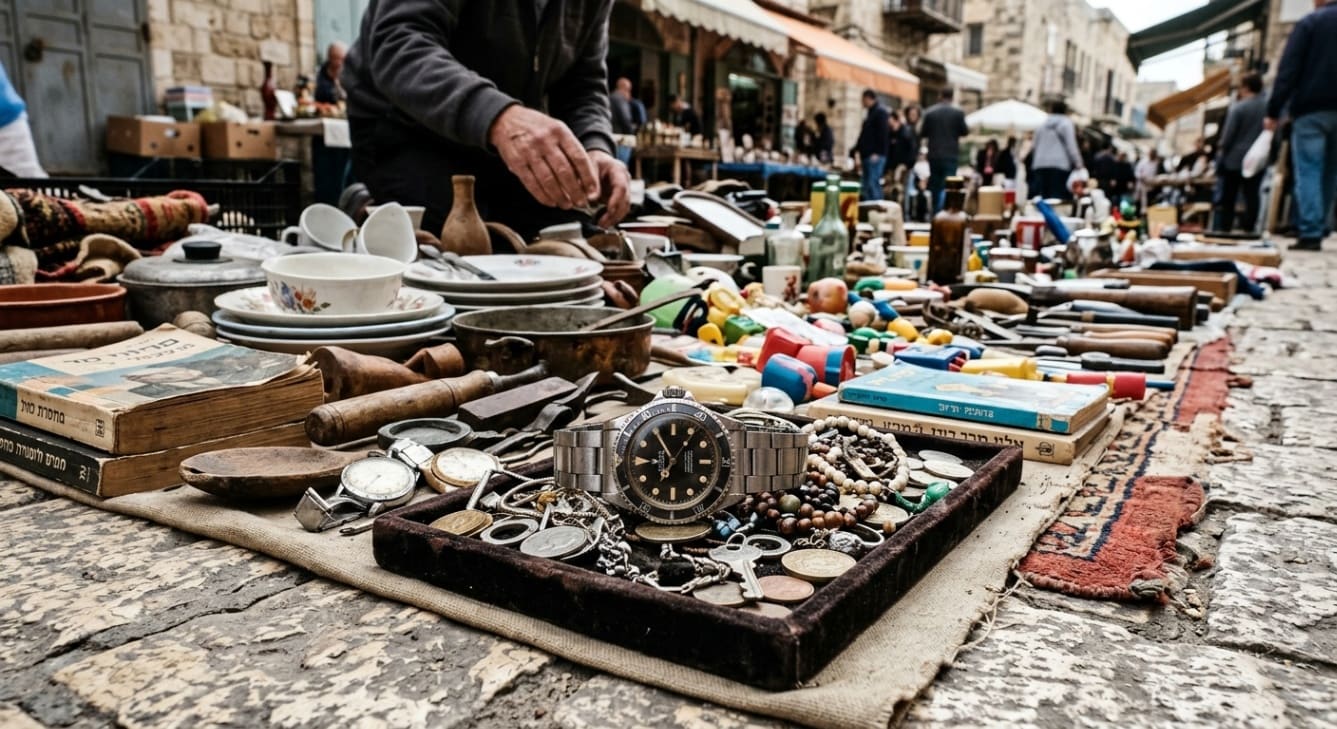
While most visitors to flea markets and second-hand fairs are looking for a nostalgic piece for their home or a special outfit for the weekend, for a growing group of people these markets are a fierce trading arena and a lucrative source of income. They call themselves "flippers" — bargain hunters who take items that were abandoned or sold for pennies, and realize their true value at a profit of hundreds or even thousands of percent.
A Sharp Eye and Knowledge Worth Its Weight in Gold
Big profits in the second-hand world aren't a matter of pure luck, but of professional knowledge and a keen eye. Skilled hunters arrive at the markets early in the morning, before sunrise and before the stalls are fully set up. They know how to spot a renowned designer's almost-faded signature on the back of an old wooden chair, tell real gold jewelry from a cheap imitation, or recognize a rare record pressed in a limited edition in the 1970s.
What the original seller sees as "junk" or something taking up space in storage often turns out to be a coveted collector's item. Bargain hunters exploit this information gap: they buy a classic leather jacket for 30 shekels at a local market and sell it for 800 shekels to a collector in the United States through online platforms.
Technology in the Service of Flipping
In the past, trading in antiques and second-hand goods was reserved for art appraisers and veteran dealers. Today, the smartphone has made the field more accessible than ever. Modern hunters use image-recognition apps, visual search engines and real-time auction databases. When they come across a painting, a piece of porcelain or an old video game, a quick scan is enough to find out what similar items sold for online in the past week.
After the purchase, the critical stage is care and marketing: thorough cleaning, light restoration, professional photography and telling the story behind the item. Smart marketing on platforms like eBay, Etsy or dedicated social-media groups is the link that turns a neglected item into a handsome profit.
More Than a Living: The Thrill of the Hunt
Beyond the financial gain, people in the field say it's an addictive way of life. The thrill of discovering an object of historical or design value buried under a pile of junk brings an adrenaline rush that's hard to find in a routine office job. Second-hand culture proves time and again that one person's trash is truly another person's treasure — and whoever knows how to spot that treasure turns their passion into a thriving business.